| ||
|
Friday, April 6, 2012
Important Places in Chennai

Wednesday, April 4, 2012
Important Tourist Places in Trichy
Srirangam
 The district's most important pilgrim centre is located in an island just 7 km from Trichy. Srirangam, surrounded by the waters of river Kaveri on one side and its tributary kollidan on the other, is a 600 acre island-town enclosed within the seven walls of the gigantic Sri Ranganathaswami Temple. There are 21 gopurams, among which the Rajagopuram is the largest in South India. The 72m high 13-tiered gopuram was built in 1987 and dominates the landscape for miles around, while the remaining 20 gopurams were built between the 14th and 17th centuries. Originally, there was just a small shrine where the temple is today, but it was added on to and expanded by the Cholas, Cheras, Pandyas, Hoysalas, the Vijayanagar Kings and Nayaks of Madurai and today Srirangam stands as the biggest temple complex in the country.
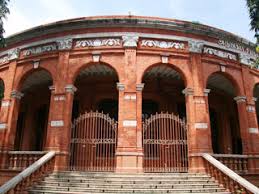

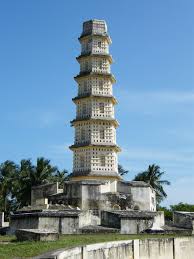 The eight-storeyed victory tower here was built by the Maratha King Serfoji in the year 1814 to commemorate the victory of the British over Napoleon Bonaparte at Waterloo. The name 'Mannora' is derived from the word minaret meaning small minar. From this 30 metre high tower one can have a panoramic view of the palm fringed Bay of Bengal. This tower also served as a light house.
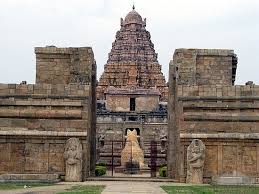
 This church built in 1812 has louvred doors which open to convert it into an airy pavillion and is located near the Theppakulam.


 Narthamalai has some of the oldest structural stone temples, built by the Mutharaiyars. This temple has six large skillfully carved statues of Vishnu in the central hall. A 9th century Pallava cave temple dedicated to Siva lies to the south, and in front of this is the Vijayalaya Choliswaran temple. Vijayalaya was the first of the Later Cholas and as such, this Siva temple is one of the earliest Chola creations, but not as grand as the ones that were to follow. However, glimpses of an artistic greatness that was still to come can be seen in the beautiful figures of the dancers in front of the vimana, the elegantly carved dwarapalakas and the figures of other gods.

Government Museum
This is located on Bharathidasan Road. Bronze and stone sculptures are on display here. Admission is free, the museum is open on all days except Fridays.
Kudumiyanmalai (25km)
The Siva temple here has some interesting inscriptions as well as beautiful sculptures. One of the inscriptions deals with the musical treatise of Mahendravarman Pallava and his experimentation with an eight-stringed instrument called Parivadini.
Sittannavasal (58km)
In this village are the remains of a 2nd century B.C. Jain cave temple. Fresco paintings reminiscent of Ajanta adorn the walls. Many of them are typical of the 9th century Pandyan period and include exquisitely detailed pictures of animals, fish, ducks, people gathering lotuses from a pond and two dancing figures. There are also inscriptions dating back to the 9th and 10th centuries. Fresco paintings from the 7th century can be seen on the ceiling of Ardhamandapam. There are many pre-historic burial sites around Sittannavasal and among the relics unearthed are burial urns, cists and Kungupatarai.
Manora (72km)
Gangaikondacholapuram (100km)
The Brahadeeswarar temple at Gangaikondacholapuram was conceived and constructed by the Chola King Rajendra - I after his victory over the kingdoms bordering the river Ganga. Apart from the huge Nandi, there are some beautiful sculptures including a dancing Ganesha, a lion-headed well and a stunning figure of King Rajendra being crowned by Siva and Parvati.
Thanjavur (54km)
The capital of the imperial Chola dynasty a thousand years ago. The magnificent Brahadeeswarar temple dedicated to Lord Siva bears witness to the glory of Chola architecture, sculpture and paintings. A museum in the temple countyard has interesting Chola artefacts.The Saraswathi Mahal Palace was started by the Nayaks of Madurai around 1550 AD and completed by the Maratha rulers of Thanjavur.
The Palace Library instituted by Maharaja Serfoji has a collection of 30,000 palm leaf manuscripts and many rare European books. The Thanjavur Art Gallery has priceless collection of bronze icons and granite sculptures dating from the 9th century AD. Thanjavur is a good place to shop for Thanjavur Art Plates, handicrafts, handwoven silk, bronze icons, intricately inlaid brass work and bejewelled paintings.
St.Joseph's chruch
Grand Anaicut - Kallanai (24 km)
The Grand Anaicut built by Karikalan Chola in the 2nd century A.D. to harness the waters of the Kaveri. Made of stone, the dam is 329 m long and 20m wide and still very much in use. Additions have been made in the form of a road bridge on top of the dam. This is a good picnic spot.
Mukkombu (Upper Anaicut) (18 km)
At the head of the Srirangam Island, there is another dam called Upper Anaicut or Mukkombu which is about 685 m long. Constructed in the 19th century across Kollidam, this dam has been forced into three sections instead of one long stretch because of the shape of the island. This is also good spot for picnics.
Narthamalai (17 km)
Tirumayam (79 km)
Tirumayam is one of the most interesting places around Pudukkottai. There are a couple of rock cut cave temples and an old fort, both of which are worth stopping for. The cave temples which lie side by side are dedicated to Siva ( Sathyagireeswarar ) and Vishnu ( Sathyamoorthy ) and were built by Mahendravarnan and Narasimhavarman Pallava. Atop the hill is the old fort called OOMAIYAN KOTTAI where captured rebels were imprisoned by the British. It was built in the year 1687 by King Sethupathi of Ramanathapuram. The Siva temple has some inscriptions of music. There are two shrines in the Vishnu temple, and one where the Lord is represented in a reclining posture is particulary remarkable as it is the largest of its kind in the country. On the walls behind the idol are beautiful carvings depicting Vishnu and the serpent Adisesha chasing away rakshasas (demons) by spewing fire and poison.
Important Tourist Places in Madurai
Sri Meenakshi - Sundareswarar Temple
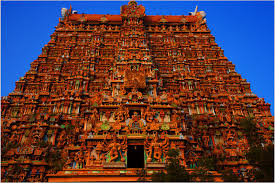
Lord Siva in his incarnation as Sundareswarar and his fish-eyed spouse, Meenakshi, are enshrined in this twin temple. There are four massive gateways enclosing these two shrines. Even a casual visitor is fascinated by the many paintings and sculptures.
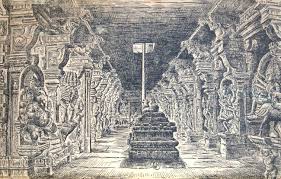
A striking feature of the temple is the astonishing structure know as “Ayiramkaal Mandapam” or the Hall of Thousand Pillars and each pillar features high, ornate, bold sculptures that look life like. View from any angle these pillars appear to be in a straight line, an architectural masterpiece indeed In the outermost corridors are situated the matchless musical pillars carved out of stones. When it is tapped, each pillar produces different musical note.
Thirupparankundram Temple
Timing: The Meenakshi Amman Temple is usually opens between 0500hrs and 1230hrs and again between 1600 hrs and 21.30 hrs.
Synonymous with Madurai is the Meenakshi Sundareswarar twin Temple, the pivot around which the city has evolved. The Meenakshi Temple complex is literally a city - one of the largest of its kind in India and undoubtedly one of the oldest too. The temple grew with the contribution of each dynasty and victorious monarchs, into an enormous complex extending over an area of 65000 Sq m. The temple first came in to being 2000 years ago and was substantially expanded during the regime of Thirumalai Nayak(1623-55 AD).
Lord Siva in his incarnation as Sundareswarar and his fish-eyed spouse, Meenakshi, are enshrined in this twin temple. There are four massive gateways enclosing these two shrines. Even a casual visitor is fascinated by the many paintings and sculptures.
A striking feature of the temple is the astonishing structure know as “Ayiramkaal Mandapam” or the Hall of Thousand Pillars and each pillar features high, ornate, bold sculptures that look life like. View from any angle these pillars appear to be in a straight line, an architectural masterpiece indeed In the outermost corridors are situated the matchless musical pillars carved out of stones. When it is tapped, each pillar produces different musical note.
Thirumalai Nayak Palace
Timing: The Palace is open for visitors between 0900hrs and 1300 hrs and again between 1400 hrs and 1700 hrs. Entrance Fee. Rs.1/-
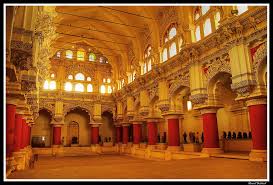
About 1.5 Kms from the Meenakshi temple, this palace was built in 1636 by the ruler whose name it bears. The imposing edifice is famous for the “Stuccowork” on its domes and impressive arches. The Sorgavilasam (Celestial Pavilion), measuring 75m x 52m, constructed entirely of brick and mortar without the support of a single rafter or girder, is a marvel of indo-Saracenic architectural style. Among other striking features of the palace are the massive white pillars, several of which line the corridor that runs along the courtyard. Connected by high decorated arches, these pillars measure 20m in height and have a circumference of 4m. Elsewhere, there are polished black stone pillars of varying heights. It was King Thirumalai Nayak’s grandson who demolished much of the fine structure and removed most of the jewels and woodcarvings in order to build his own palace in Tiruchirapalli. (His dream never came true).
Thanks to Lord Napier, the then Governor of Madras, who partially restored the palace in 1866-72, and the subsequent restoration works carried out several years ago, today, we get to see the Entrance Gate, The Main Hall and the Dance Hall. There’s daily sound and light show in English at 1845 hrs and in Tamil at 2015 hrs. This half an hour show extols the virtues of King Thirumalai, particularly his passion for arts, his victories in battle and his love for his subjects.
Tickets for the show: Adults Rs.10/-- Children Rs.5/-
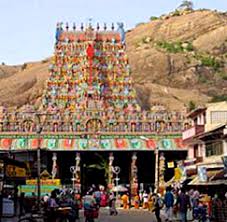
Thirupparankundram Temple
It is located 8 Kms South of Madurai Railway Junction. The temple here is one of the six abodes of Lord Subramanya. Its innermost shrine is cut out of a solid rock.
Alagar koil
 About 21 Kms North East of Madurai, stands a celebrated Vishnu Temple dedicated to Lord Alagar. The temple is situated on a hill amidst panoramic surroundings. The shrine is know as Alagarkoil and the hill , Solaimalai. The temple also contain some beautiful carvings and makes the visit rewarding. Palamudirsolai, one of the six abodes of Lord Subramaniya is located atop the Hill.
Gandhi Museum
Alagar koil
Gandhi Museum
Timings: 1000hrs to 1300 hrs and 1400 hrs to 1730 hrs. (Open all days)
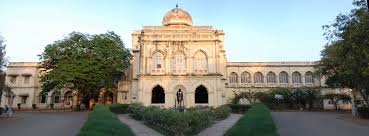
Housed in the old Palace of Rani Mangammal, the Gandhi Museum depicts the highlights of the freedom struggle and contains a picture gallery of the Gandhian movement. Also can be seen are a gallery of relics, Khadi and village industries section and South Indian Handicrafts section.
Mariamman Teppakulam
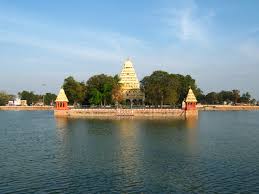
Mariamman Teppakulam is a beautiful square tank spread over a huge area of almost 16 acres, located about 5Kms East of Meenakshi Temple. The tank is the scene of the colourful float festival held in January/February to celebrate the birth anniversary of King Thirumalai Nayak, who built this tank. The deities of Meenakshi and Sundareswarar are placed in a float, called “Teppam”, decorated with flowers and illuminated with hundred of lights. This float is taken around the tank to the sound of traditional music. On the Northern side of the tank a temple is dedicated to Mariamman , a famous village deity of Tamil Nadu.
Subscribe to:
Posts (Atom)
LinkWithin
